
By Mehr Sokhanda
Most founders today are building on top of AI, pitching investors on AI, or handling board questions about their « AI strategy » — often without a clear picture of what’s happening behind the scenes. That gap matters. You don’t need to become a machine learning engineer, but you do need enough fluency to ask the right questions, spot the difference between a real capability and a demo, and know where the risk actually lives in your product.
That’s the gap a recent AI Readiness session — run by Hessie Jones (innovations manager at Altitude Accelerator and data privacy and AI veteran) and Saurabh Tripathi (machine learning engineer at Samsara) set out to close for a room of startup founders. The session moved from 1950s symbolic logic to today’s agentic AI systems, providing founders with a handful of decision-making frameworks buried inside the technical detail. Here’s what matters.
AI is not one thing — and that matters for how you talk about it
The session opened with a reminder that « artificial intelligence » is a much broader umbrella than most people treat it as. As Jones put it early on, « if you know anything about LLMs, agentic AI, deep learning, machine learning, generative AI, these are all under the bucket of artificial intelligence. You are here because you want to learn about where all of this began, how we got to today’s ChatGPT, Claude, and all these general-purpose systems. » When a founder says, « we use AI, » that sentence is nearly meaningless until you specify which of these you actually mean — a rules engine, a classifier, a clustering model, or a large language model wrapped in an agent framework. Investors and customers need to know the difference, and being vague about it is a credibility risk, not a marketing advantage.
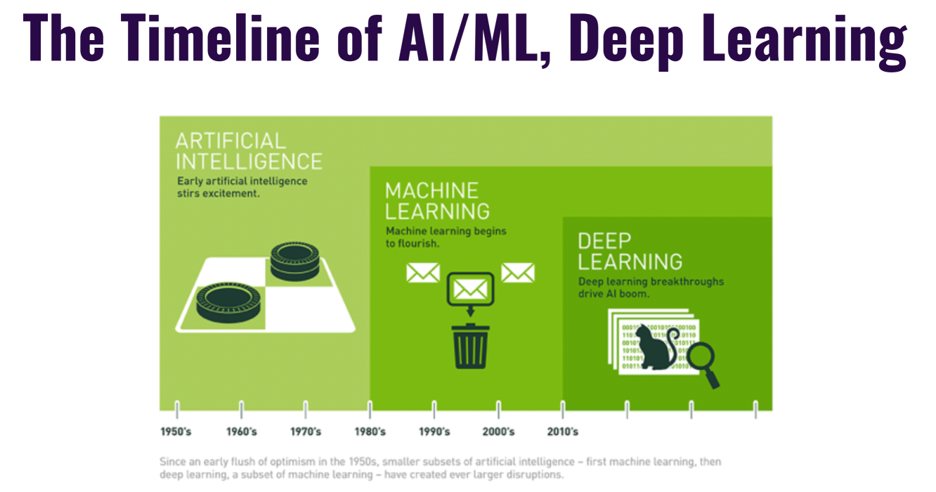
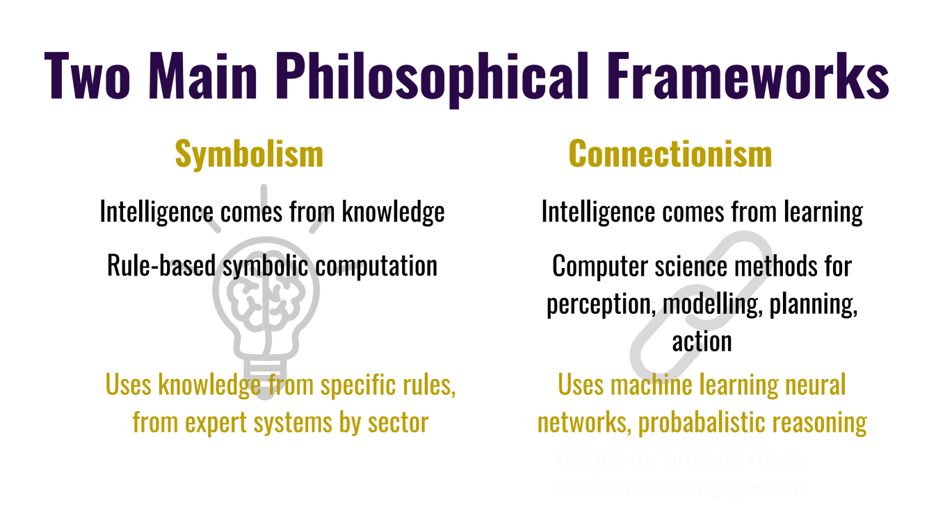
The talk traced two historical philosophies that still shape how systems get built today: symbolists, who believed intelligence came from encoded knowledge and expert rules, and connectionists, who believed intelligence came from learning ability itself — pattern recognition from data rather than hand-written logic. The first camp produced expert systems like MYCIN, a 1970s Stanford program that used 500–600 hand-coded rules to help diagnose infections. It worked, but it was rigid: add a new disease, a new drug interaction, a new edge case, and someone had to manually write more rules. That rigidity is exactly why the field moved toward machine learning — systems that infer the rules from data instead of being told them.
Your AI project starts with a business decision, not a model
A crucial idea from this session every founder should use on their roadmap, is this one from Tripathy:
« Machine learning doesn’t really begin with an algorithm or model. It begins with a business goal.
To make the idea concrete, let’s take the example of customer churn. How can a business identify customers who are likely to leave early enough so it can take proactive action? The first step is to define the problem.
Even for the same churn problem, we could frame it in different ways.
- Are we trying to predict whether a customer will churn in the next 30 days?
- Rank customers by churn risk?
- Estimate how much revenue is at risk?
- Or identify which customer is most likely to respond to a retention offer?
These framings might sound similar, but they translate into different problems: classification, ranking, regression, or treatment effect/optimization. So specifying the business problem precisely is the first and one of the most important steps, and it primarily dictates what happens next. »
The point isn’t the churn example itself — it’s how many genuinely different engineering problems were hiding inside what sounded like one simple ask. « Will this customer churn, » « who’s most at risk, » « how much revenue is exposed, » and « who should we target with an offer » are four different modeling problems (classification, ranking, regression, and optimization, respectively), each requiring different data, different evaluation methods, and different engineering effort. In practice, this means when your team says « let’s add AI to do X, » the founder’s job is to push back until X is precise enough to know what kind of model it even is. Vague AI ambitions produce vague, expensive engineering.
He also laid out the full lifecycle so founders know what they’re actually funding: define the problem, collect and clean data, turn raw data into features, select and train a model, evaluate it on data it hasn’t seen, then deploy and monitor it. That last part is easy to forget in a pitch deck. As he put it: « And then finally, we deploy the model, we monitor it. And we must remember customer behavior changes over time. The products change, the markets change, data changes. So machine learning essentially is not like a one-time project. It’s a feedback loop where we make predictions, take some actions on those predictions, and monitor the outcomes, and then go back and keep improving. »
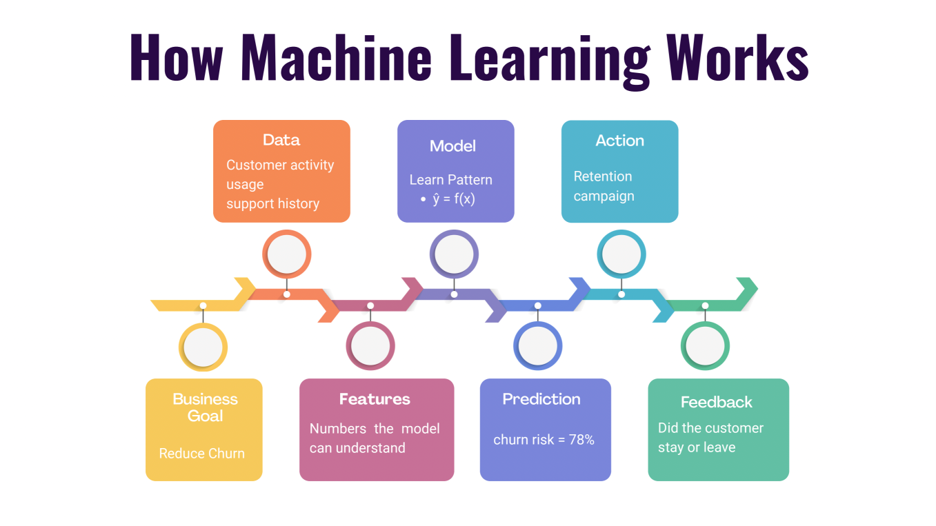
If your team is treating a model as a one-and-done deliverable, budget for the ongoing loop — customer behavior, products, and markets change, and a model trained on last year’s data quietly decays.
Thresholds are business decisions disguised as math
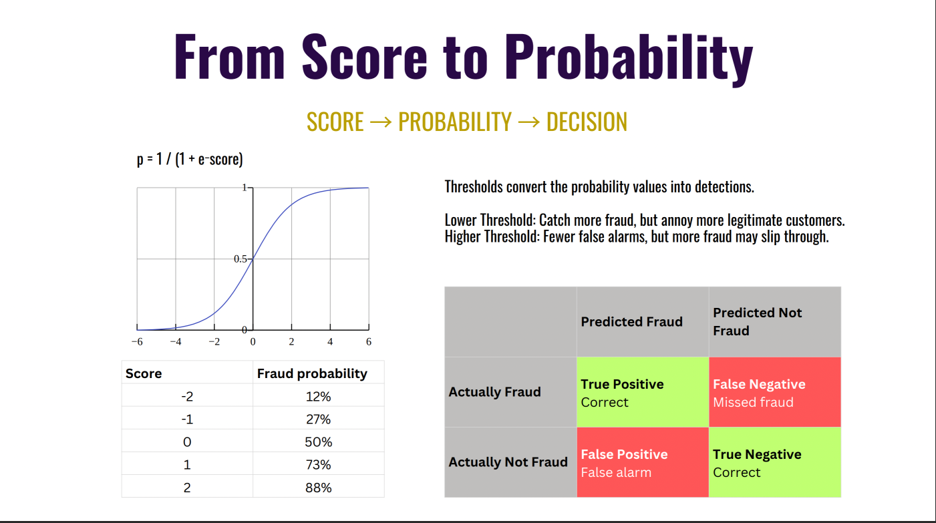
The session also walked through how a model’s raw output becomes a real decision. A classifier doesn’t just say « fraud » or « not fraud » — it produces a probability score, and someone must decide on the cutoff. This is where founders, not engineers, should be in the room. As Tripathy explained:
« Now we need to convert this probability into a business decision. And that’s where the thresholds come in. The business chooses at what threshold above which we call this transaction fraud versus non-fraud. If we keep the threshold too low, we catch many frauds, but we also flag a lot of legitimate customers and that can impact the customer’s sentiment. If we set the threshold very high, we reduce the false alarms, but now more fraud can go through. So, for us to be able to make a decision on what that optimal should threshold be, … for that, we need some metrics.”
This trade-off — often visualized through what is called a confusion matrix, tracking true positives, false positives, false negatives, and true negatives — is not a data science detail to delegate away. It’s a value and risk-appetite call: what is worse for your business, annoying a good customer or missing a bad transaction?
Every AI feature that makes a yes/no call — fraud flags, content moderation, lead scoring, approval workflows — has one of these thresholds sitting inside it, and someone on your team is setting it, consciously or not. Ask them what it’s set to and why.
Do not over-trust clusters and do not assume "the data speaks for itself."
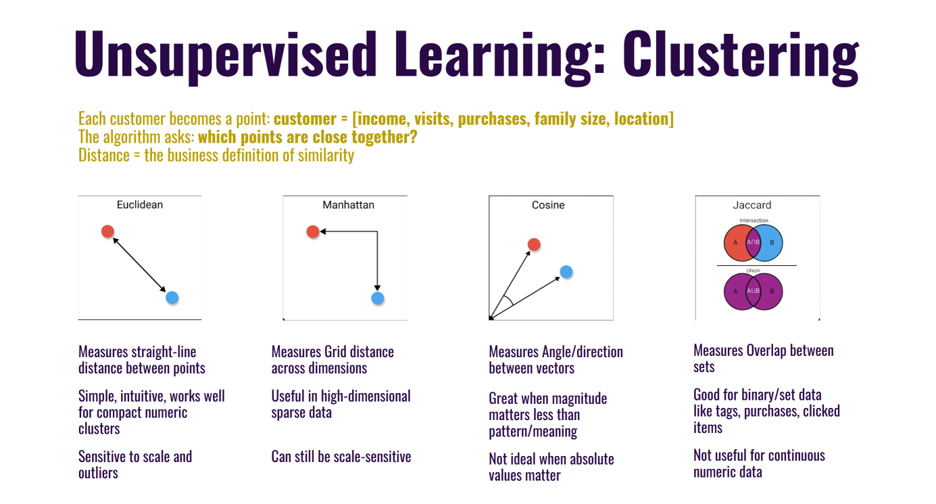
The session also covered unsupervised learning — techniques like clustering, which groups customers or data points by similarity without being told the « right » answer in advance. This is the engine behind customer segmentation, targeted marketing, and product recommendations.
But Jones flagged a trap founders fall into constantly: treating a cluster as an “objective truth. » The caution here is that it doesn’t mean that clustering, again, is an absolute truth. It discovers a similarity to all the features that we give it to. We can cluster by income, location, and family size. We may get a different demographic segment. If we group things by product usage, purchase frequency, and engagement, we may get a behavioral segment, which may be different than what we see today. So, the business will determine the features that we’re going to be using to condition the clusters that actually materialize. »
Neither segmentation is « correct » — the segments only mean what the features you chose to feed the model allow them to mean. If your growth or product team is making roadmap or targeting decisions off a clustering output, the first question is: which features drove this grouping, and does that match the actual business question you are trying to answer?
Know the difference between generative AI, an AI agent, and "agentic AI" — because your investors will ask
Toward the end, the session drew a distinction that’s become genuinely important for founders to get right, because these terms get thrown around almost interchangeably in fundraising decks and they are not the same thing. Jones laid out the distinction:
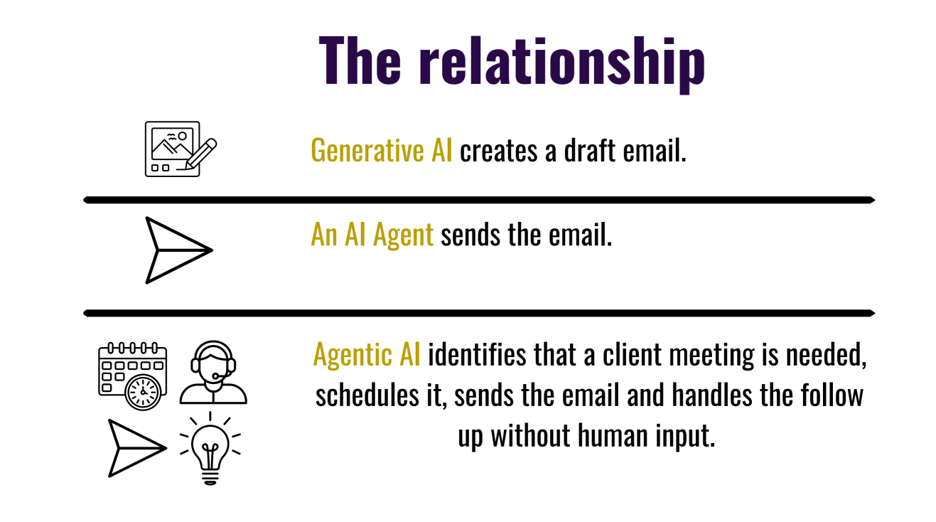
“Generative AI is really just your creative tool. It’s an umbrella term that basically means that these LLMs have the ability to create text, code, and images. It understands a space and can generate novel content, but it still waits for human instruction. The LLM is just that. It’s a brain, but it doesn’t really do anything. It has no memory; it has no intent. It is the base model that predicts tokens based on the patterns in the data, based on input and output.
AI agents and agentic AI are different things.
AI agents are workers, so they execute predefined tasks. They detect intent and can call tools like APIs to handle specific responses. Think of them as handling one task at a time.
Agentic AI, on the other hand, operates within goals, plans, huge context, and memories. Think of it as agents and sub-agents. They monitor progress and decide what to do in real time. They can have human direction, but they do not have a specific instruction.”
If your product claims to be « agentic, » be ready to explain which of these three layers it’s actually operating at — the gap between a chatbot that drafts an email and a system that autonomously identifies, schedules, and runs a multi-step workflow is enormous, and increasingly investors and enterprise buyers know to probe it.
Respect the limits — hallucination, opacity, and cost aren't going away soon
The session closed with a clear-eyed, non-hype assessment of where generative AI stands, and it’s worth internalizing before you promise customers more than the technology can deliver. As Jones noted: « There is no new technology within generative AI, which is the reason why even within these deep learning layers is still very opaque. It’s trained on internet data, but we don’t know what the training sets were. It still needs a lot of human feedback, but it is limited because a lot of the reinforcement of learning for human feedback hasn’t been easily available. And this can cause harm because of that. So it will always have probabilistic outputs. It can lead to hallucinations because of that. It still has a fundamental barrier that it doesn’t really understand yet. It does not really reason. And so, it’s still prone to aberrant behavior and it’s very costly. »
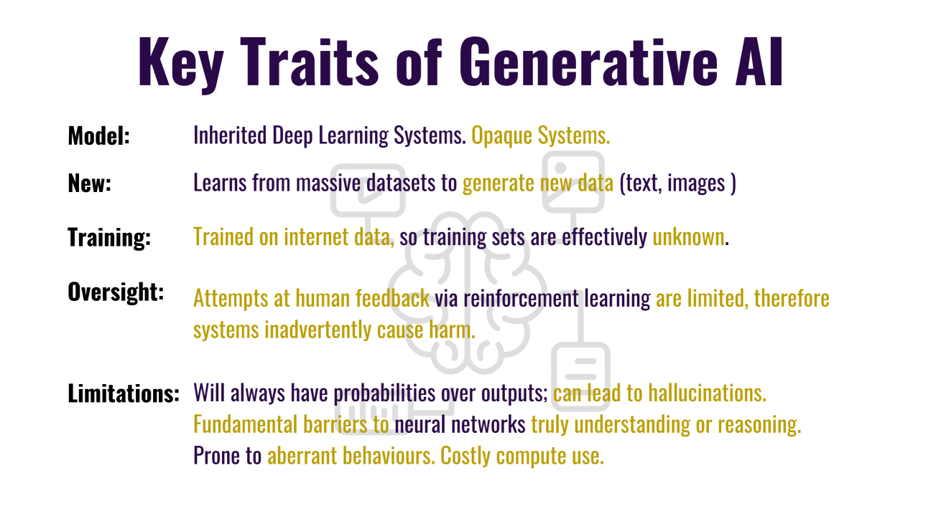
For founders building customer-facing AI features, this isn’t a reason to avoid the technology — it’s a reason to design failure. Build in human review for high-stakes decisions, don’t ship unmonitored autonomous actions where a hallucination is costly, and price your product with token costs and inference costs in mind, since those aren’t going to zero overnight.
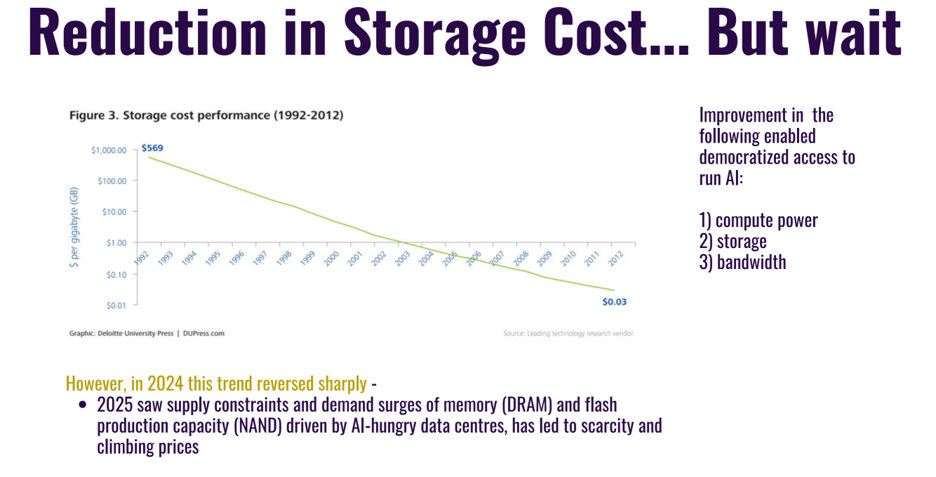
The bigger-picture framing is useful for setting expectations with your own team and investors, too. Despite the pace of recent progress, Jones was candid about exactly how far along we are:
« For a long time, advancements across the evolution of AI have been in narrow AI. That’s where we are today. It’s human controlled, human oversight. We’re not there yet. As for superintelligence, that isn’t possible until we’ve fixed the current issues with the technology, for which there are many. Perhaps, we may need to accept that perhaps Generative AI will need to be replaced with something else that increases our control and minimizes risks.”
For now, we’re squarely within the advanced machine learning phase. But we need oversight, remediation, and token costs to come down so everyone can access technology. And we have to also question whether current AI will compete with humans for much needed energy resources especially in this volatile climate period. »
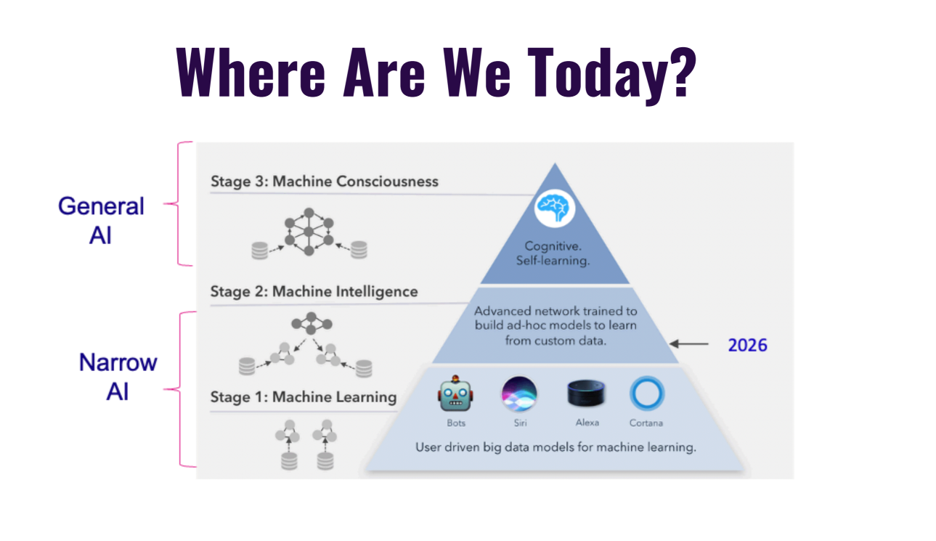
If you are scaling an AI-heavy product, that last point — the sustainability of the compute these systems demand — is not just an ethics footnote; it’s a real long-term cost line.
Overall, the real takeaway is AI literacy is now a leadership skill, not an engineering nice-to-have. A founder who knows that models start with a precise business problem, that thresholds are risk calls, and that « agentic » means something specific isn’t just better informed — they can actually steer the roadmap instead of repeating vendor language. As one attendee put it at the end of the session, « I learned a whole bunch that I didn’t know. » Most founders would say the same.
Watch the full webinar here – https://youtu.be/A9EOZGADSfc
At Altitude Accelerator, we are always looking for innovative ideas. If you are a startup founder seeking funding, expertise, and mentorship—and your business is ready for its next phase, please contact us info@altitudeaccelerator.ca. We are now accepting applications for Investor Readiness and Market Readiness. Please review our programs.

